HBDR_MCM adx Approval in 2026
Introduction to HBDR_MCM adx Approval
In the dynamic world of digital advertising, publishers constantly seek avenues to maximize their ad revenue. One of the most significant opportunities lies in gaining access to Google Ad Exchange (AdX) premium demand. However, direct access to AdX often comes with stringent eligibility requirements that many publishers struggle to meet. This is where HBDR_MCM adx approval becomes a game-changer. HBDR, a certified Multiple Customer Management (MCM) partner, facilitates this access, allowing publishers to tap into a lucrative ecosystem without compromising control over their ad operations.
This comprehensive guide will delve into everything you need to know about securing HBDR_MCM adx approval, understanding its benefits, and navigating the process to significantly boost your ad revenue. We will explore how HBDR’s MCM program extends AdX eligibility, ensuring your inventory competes with high-value demand.
What is Google MCM and HBDR’s Role?
Google’s Multiple Customer Management (MCM) program is designed to allow authorized third-party partners, like HBDR, to manage Google Ad Manager (GAM) accounts on behalf of multiple publishers. This program is crucial for publishers who may not meet Google’s direct eligibility criteria for AdX but still wish to access its premium demand. HBDR, as a certified MCM partner, acts as a bridge, extending AdX eligibility to its child publishers.
Through HBDR’s MCM relationship, publishers gain access to premium Google Ad Exchange demand, advanced yield optimization strategies, and enterprise-level support. This means even smaller or newer publishers can compete with larger entities for high-value ad impressions. HBDR handles the technical complexities, policy compliance, and revenue reconciliation, allowing publishers to focus on content creation and audience growth [1].
The Power of HBDR Manage Account (MA)
HBDR’s Manage Account (MA) offering is a specific type of MCM relationship within Google Ad Manager 360. When a publisher connects to HBDR’s parent MCM account, their Google Ad Manager network becomes a child publisher. This connection is the gateway to HBDR_MCM adx approval, granting access to Google AdX premium programmatic demand that would otherwise be inaccessible.
The significant advantage of the Google MA arrangement is that publishers retain full operational control over their own GAM. Your existing ad units, line items, reporting, and trafficking workflows remain exactly as they are. HBDR’s role is to simply extend AdX eligibility, allowing high-value exchange demand to compete in your unified auction alongside your other demand partners. This results in more competition for every impression, leading to higher CPMs and significantly increased revenue, all without relinquishing control of your ad operations [2].

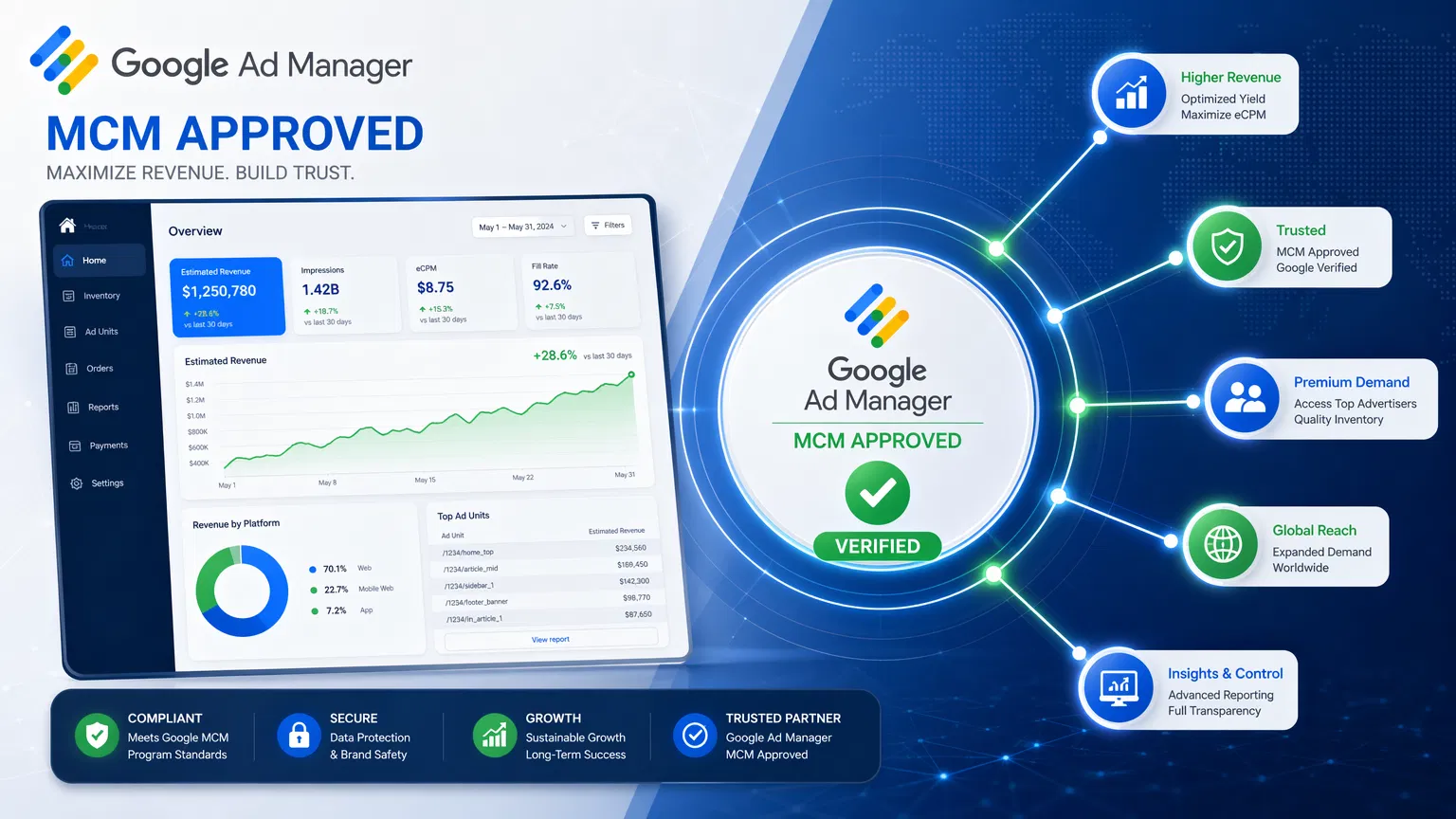
Image 1: A visual representation of a Google Ad Manager dashboard after HBDR_MCM adx approval, showcasing increased revenue and verified status.
Key Benefits of HBDR_MCM adx Approval
Securing HBDR_MCM adx approval offers a multitude of benefits for publishers aiming to optimize their ad revenue and streamline their ad operations:
•Premium AdX Access: Gain entry to Google Ad Exchange’s exclusive demand pool, which includes top-tier advertisers and higher-paying campaigns. This is often the primary driver for seeking HBDR_MCM adx approval.
•Higher Revenue Share: Benefit from HBDR’s negotiated revenue share tiers, which improve as your network grows. The collective scale of HBDR’s network allows for better economics than individual publishers could achieve.
•Policy Compliance: HBDR manages all Google Ad Manager policy enforcement, ads.txt management, and compliance monitoring, freeing publishers from these often complex and time-consuming tasks.
•Network Management: Access to a centralized dashboard for managing publisher accounts, monitoring performance, and identifying optimization opportunities at scale.
•Dedicated Support: Priority access to HBDR’s ad operations team and direct escalation paths to Google for account reviews, policy questions, and technical troubleshooting.
•Transparent Reporting: Real-time revenue reporting with detailed breakdowns by publisher, ad unit, geography, and demand source, ensuring full transparency with no hidden fees.
•Instant Revenue Lift: Publishers typically observe a 20-40% revenue increase within the first 30 days of activating HBDR MA, as AdX fills impressions and raises the floor for every auction [2].
The Seamless HBDR_MCM adx Approval Process
Getting started with HBDR_MCMadx approval is designed to be straightforward and efficient. The process typically involves a few key steps:
1.MCM Invitation: HBDR initiates an MCM invitation from its Google Ad Manager 360 parent account to your GAM network. This is the initial step towards establishing the parent-child relationship.
2.One-Click Approval: Publishers accept the invitation directly within their own GAM account. This is a simple, one-click approval that links your network to HBDR’s.
3.AdX Demand Integration: Once the MCM link is active, Google Ad Exchange demand from HBDR’s parent account becomes available to compete in your ad auctions. AdX line items will appear inside your GAM, competing alongside your existing header bidding, direct deals, and other programmatic partners.
4.Continued Control: You maintain full control over your GAM, including ad units, line item priorities, targeting, reporting, and yield strategy. HBDR provides the AdX connection, while you manage your ad operations.
The entire onboarding process, from site approval to demand optimization, typically takes 5-7 business days. Publishers retain full ownership of their accounts and data throughout the relationship, and HBDR’s MCM agreement is transparent with no lock-in periods [1].

Image 2: A symbolic image of a key unlocking a gate labeled ‘Premium AdX Demand’, representing the access gained through HBDR_MCMadx approval.
Distinguishing MA from MI: Why HBDR_MCM adx Approval is Unique
It’s important to understand the distinction between Google’s Manage Account (MA) and Manage Inventory (MI) within the MCM program, as HBDR_MCM adx approval primarily operates under the MA model. This distinction is crucial for publishers deciding which partnership model best suits their needs.
•Manage Account (MA): With MA, the publisher remains the primary operator of their Google Ad Manager. HBDR provides the AdX connection, allowing premium demand to flow into the publisher’s existing GAM setup. The publisher retains full control over their ad units, line items, reporting, and overall yield strategy. This model is ideal for publishers with their own ad operations team who primarily need access to AdX demand without relinquishing control.
•Manage Inventory (MI): In contrast, with MI, the MCM partner (HBDR in this case) takes over the operational management of the publisher’s ad stack entirely. This includes setting up ad units, optimizing yield, and managing the GAM on behalf of the publisher. MI is a full-service offering, suitable for publishers who prefer to outsource their ad operations completely.
HBDR_MCMadx approval through the MA model ensures that publishers can leverage premium AdX demand while maintaining autonomy over their ad operations, making it a preferred choice for many experienced ad ops teams [2].
Maximizing Your Revenue with HBDR_MCM adx Approval
Once you have secured HBDR_MCMadx approval, the journey to maximizing your ad revenue truly begins. The integration of AdX demand into your existing ad stack creates a more competitive auction environment, driving up CPMs and overall earnings. To further optimize your revenue, consider the following strategies:
•Continuous Monitoring: Regularly review your performance reports within Google Ad Manager. Pay attention to metrics like CPM, fill rate, and revenue per ad unit. HBDR’s transparent reporting helps in this regard.
•Ad Unit Optimization: Experiment with different ad unit sizes, placements, and formats. Ensure your ad units are viewable and provide a positive user experience, as this directly impacts advertiser bids.
•Traffic Quality: Maintain high-quality traffic to your website. Advertisers are willing to pay more for engaged audiences, which translates to higher AdX demand.
•Policy Compliance: Adhere strictly to Google’s publisher policies. Any violations can lead to account suspension and loss of AdX access. HBDR assists with compliance, but ultimate responsibility lies with the publisher.
•Leverage HBDR Support: Utilize the dedicated support provided by HBDR’s ad operations team. They can offer insights, optimization recommendations, and assist with any technical issues.
By actively managing and optimizing your ad inventory post-HBDR_MCM adx approval, you can unlock the full potential of premium AdX demand and achieve sustainable revenue growth.
Image 3: An infographic illustrating the simplified 3-step process for HBDR_MCMadx approval, from application to revenue growth.
Conclusion: Your Path to Enhanced Ad Revenue
HBDR_MCM adx approval represents a pivotal opportunity for publishers to elevate their ad revenue strategies. By partnering with HBDR, you gain unparalleled access to Google Ad Exchange’s premium demand, benefit from expert support, and maintain full control over your ad operations. This powerful combination ensures a competitive edge in the digital advertising landscape, leading to higher CPMs and significant revenue growth.
Embrace the future of ad monetization by pursuing HBDR_MCM adx approval. It’s not just about gaining access; it’s about optimizing your potential, simplifying your operations, and securing a prosperous future for your publishing business. Take the decisive step today to transform your ad revenue.