Unlock Massive Earnings: 7 Proven Strategies for Adx for Niche Website Success in 2026!
Introduction: The Power of Adx for Niche Website Monetization
In the competitive landscape of online publishing, monetizing a niche website effectively is paramount for sustainable growth. While Google AdSense serves as an excellent starting point, savvy publishers often seek more advanced solutions to maximize their revenue. This is where Adx for niche website comes into play. Google Ad Exchange (AdX) offers a premium programmatic advertising marketplace that can significantly elevate earnings for specialized content creators. This comprehensive guide will delve into what Google AdX is, how it differs from AdSense, its immense benefits for niche sites, and the crucial steps to secure approval and optimize your ad revenue.
Table of Contents

What Exactly is Google AdX?
Google AdX, or Google Ad Exchange, is a sophisticated online programmatic advertising marketplace where high-quality ad spaces are bought and sold in real-time through automated bidding. Unlike simpler ad networks, AdX is a closed system, primarily accessible to larger publishers or through certified third-party partners [1]. It provides publishers with access to a vast pool of demand sources, including major advertising agencies, Demand-Side Platforms (DSPs), and direct advertisers, fostering intense competition for ad impressions and, consequently, higher revenue for publishers.
At its core, AdX operates on a real-time bidding (RTB) model. When a user visits a webpage, the available ad inventory is instantly put up for auction. Multiple advertisers bid simultaneously, and the highest eligible bid wins the impression within milliseconds. This dynamic process ensures that publishers receive the best possible price for their ad space, optimizing their yield [2].
AdX is seamlessly integrated with Google Ad Manager, which acts as the central ad serving platform. Publishers use Ad Manager to organize ad units, define targeting rules, and manage their inventory, allowing for unified auctions where various demand sources, including AdX, compete fairly for each impression. This integrated approach provides publishers with granular control and advanced optimization capabilities not typically found in basic ad networks.
Google AdX vs. Google AdSense: A Critical Comparison
Understanding the fundamental differences between Google AdX and Google AdSense is crucial for any publisher considering their monetization strategy. While both are Google products designed for ad monetization, they cater to different publisher needs and traffic volumes.
Accessibility and Eligibility
Google AdSense is renowned for its accessibility. It offers an easy entry point for most website owners, with relatively straightforward approval processes and minimal traffic requirements. This makes it an ideal solution for new or smaller niche websites looking to start monetizing their content quickly.
Conversely, Google AdX has significantly higher eligibility criteria. Direct access to AdX is typically reserved for publishers with substantial traffic (often cited as 5 million monthly pageviews or more) and a strong track record of brand-safe content [3]. Most niche websites gain access to AdX through certified third-party partners, who act as intermediaries, providing the necessary technical setup and optimization expertise.
Revenue Potential and Bidding Model
One of the most compelling reasons publishers aspire to use Adx for niche website is its superior revenue potential. AdSense primarily operates on a Cost-Per-Click (CPC) model, where publishers earn revenue each time a user clicks on an ad. The demand for AdSense ads largely comes from Google Ads advertisers.
AdX, however, functions predominantly on a Cost-Per-Mille (CPM) model, focusing on impressions rather than clicks. Its real-time bidding environment, coupled with access to a broader and more premium pool of advertisers (including major brands and agencies), drives significantly higher competition for ad inventory. This increased competition translates directly into higher CPMs and, consequently, greater overall revenue for publishers [2].
Control and Transparency
AdX offers publishers far greater control and transparency over their ad inventory compared to AdSense. With AdX, publishers can set granular rules for ad blocking, define floor prices, and choose specific advertisers or categories to exclude. This level of control ensures that ads displayed align with the niche website’s content and audience, maintaining brand integrity and user experience.
AdSense provides limited control over ad content, primarily allowing publishers to choose ad formats and sizes. While it offers basic blocking options, the sophisticated yield optimization and detailed reporting available through AdX (via Google Ad Manager) are unmatched.
Here’s a visual comparison of the key differences:

Why Adx for Niche Website is a Game-Changer
For niche websites, integrating AdX can be a transformative step, unlocking monetization opportunities that AdSense simply cannot provide. The specialized nature of niche content often attracts a highly engaged and specific audience, which is incredibly valuable to advertisers. AdX allows these premium advertisers to bid competitively for access to such targeted demographics.
Access to Premium Demand
Niche websites, by definition, cater to specific interests. This means their audience is often more engaged and has higher purchasing intent within that particular vertical. AdX connects these valuable impressions with premium advertisers and brands willing to pay top dollar for targeted reach. This direct access to high-quality demand sources, often unavailable through AdSense, can dramatically increase a niche site’s eCPM and overall ad revenue.
Enhanced Yield Optimization
Through Google Ad Manager, AdX enables advanced yield optimization strategies. Publishers can implement sophisticated pricing rules, conduct A/B testing on ad placements, and leverage unified auctions where direct deals, AdSense, and other ad networks compete alongside AdX. This ensures that every ad impression is sold at its highest possible value, a critical factor for maximizing earnings from specialized traffic.
Greater Control and Brand Safety
Maintaining brand safety and a positive user experience is paramount for niche websites. AdX provides robust controls that allow publishers to filter out undesirable ad categories, specific advertisers, or even sensitive topics. This level of control helps preserve the integrity of the niche content and ensures that ads are always relevant and appropriate for the audience, fostering trust and engagement.
Eligibility Requirements for Google AdX Approval
While the benefits of Adx for niche website are clear, gaining direct approval can be challenging due to stringent eligibility criteria. Google positions AdX as a premium platform, and as such, it has higher barriers to entry than AdSense.
Key Criteria Typically Include:
•High Traffic Volume: Publishers often need a significant number of monthly pageviews, with 5 million being a commonly cited benchmark [3]. This ensures a substantial inventory for advertisers to bid on.
•Brand-Safe Content: Your niche website must adhere strictly to Google’s content policies, avoiding any inappropriate, misleading, or low-quality material. Brand safety is a top priority for premium advertisers.
•Quality User Experience: The website should offer a clean, fast, and engaging user experience. This includes responsive design, minimal intrusive ads (prior to AdX integration), and valuable content that keeps users on the site.
•Valid ads.txt File: An updated ads.txt file is essential, detailing authorized digital sellers of your ad inventory. This helps prevent ad fraud and ensures transparency in the programmatic ecosystem [3].
•Google Ad Manager Account: AdX operates within the Google Ad Manager ecosystem. Publishers typically need an active Google Ad Manager account to integrate and manage AdX.
For many niche websites, meeting the direct traffic requirements can be a significant hurdle. However, this does not mean AdX is out of reach. This leads us to the most common path for niche sites to access AdX: partnering with a certified Google AdX partner.
Navigating the AdX Approval Process: Your Path to Premium Ads
For niche websites that may not meet Google’s direct traffic thresholds, partnering with a certified Google AdX partner (also known as a Google Certified Publishing Partner or GCPP) is the most viable and recommended route to gaining access to AdX. These partners have existing relationships with Google and can onboard publishers under their umbrella.
The Role of AdX Partners
AdX partners serve as intermediaries, providing niche websites with the necessary infrastructure and expertise to leverage Google AdX. Their services typically include:
•Simplified Approval: Partners can facilitate the AdX approval process, often bypassing the stringent direct traffic requirements by aggregating inventory from multiple smaller publishers.
•Technical Setup and Integration: They handle the complex technical setup, including integration with Google Ad Manager, ad unit configuration, and implementation of advanced yield optimization strategies.
•Yield Optimization and Management: Partners actively manage and optimize ad inventory, setting floor prices, managing ad networks, and ensuring maximum revenue generation through continuous monitoring and adjustments.
•Access to Premium Demand: Through their established relationships, partners bring a wider array of premium advertisers and demand sources to your niche website, increasing competition and eCPMs.
•Reporting and Analytics: They provide detailed performance reports, offering insights into ad revenue, eCPM, fill rates, and other key metrics.
While partners typically charge a revenue share (often 15-20% of AdX earnings), the increase in revenue generated through AdX often far outweighs this cost, making it a highly profitable arrangement for many niche publishers [3].
To explore options for AdX approval, you can visit adxapproval.com for more information on how to get started. You might also find helpful resources on adxapproval regarding common questions about the process.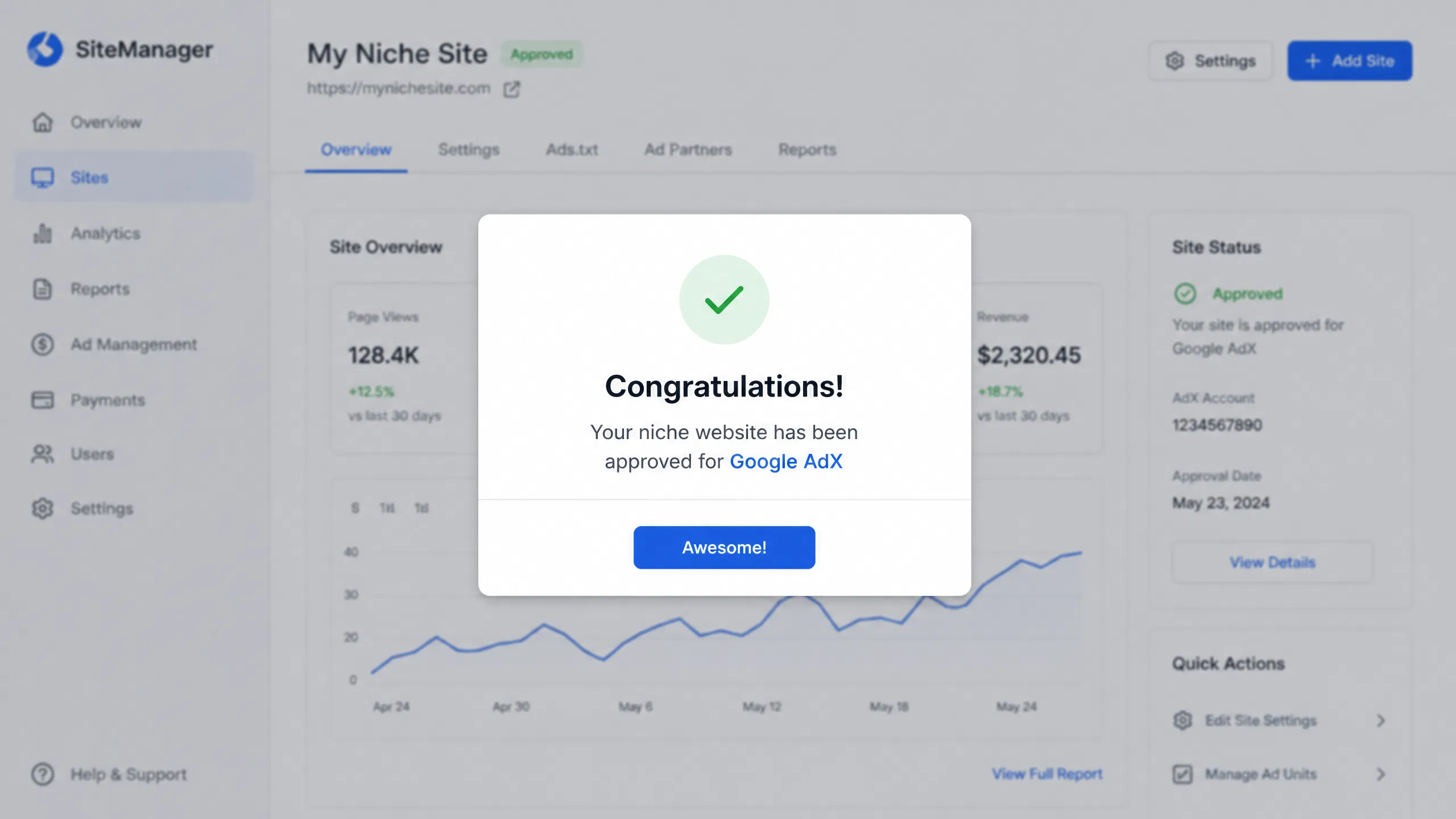

Maximizing Your Revenue with Adx for Niche Website
Once your niche website is approved for Google AdX, the journey to maximizing revenue truly begins. Effective optimization is an ongoing process that involves strategic ad placement, continuous monitoring, and leveraging AdX’s advanced features.
Strategic Ad Placement and Formats
•Above the Fold (ATF) Optimization: Place high-performing ad units strategically in visible areas, especially above the fold, to capture immediate user attention and bids. Ensure these placements are non-intrusive and comply with Google’s policies.
•Diverse Ad Formats: Experiment with various ad formats, including display, native, and video ads, if applicable to your niche. AdX supports a wide range of formats, allowing you to cater to different advertiser demands and user preferences.
•Lazy Loading: Implement lazy loading for ads below the fold to improve page speed and user experience, while still ensuring ads load as users scroll.
Dynamic Floor Pricing
AdX allows for dynamic floor pricing, enabling you to set minimum bids for your ad inventory. This is a powerful tool for maximizing revenue, as it prevents impressions from being sold at undervalued rates. Work with your AdX partner or Google Ad Manager settings to implement intelligent floor pricing strategies that adapt to market demand and historical performance.
Audience Targeting and Segmentation
Leverage Google Ad Manager’s audience targeting capabilities to segment your niche audience. By understanding your users’ demographics, interests, and behaviors, you can offer more valuable inventory to advertisers, leading to higher bids. For example, a niche site about vintage cameras could segment users interested in specific camera brands or photography styles.
Continuous Monitoring and A/B Testing
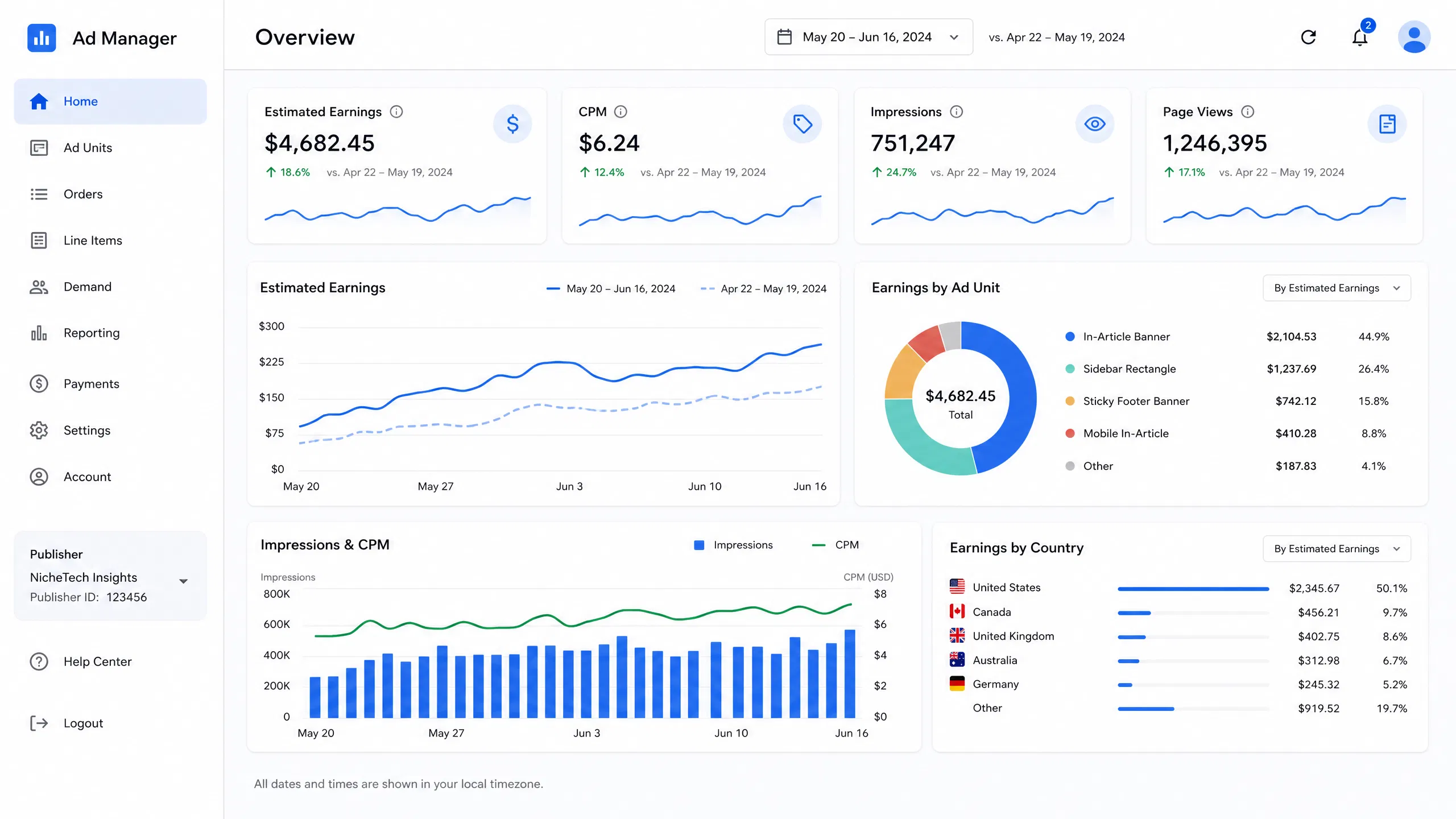
Regularly monitor your AdX performance metrics, including eCPM, fill rate, and revenue per user. Use Google Ad Manager’s robust reporting tools to identify trends, underperforming ad units, or opportunities for improvement. Conduct A/B tests on different ad placements, formats, and floor prices to continually optimize your setup. For detailed analytics, refer to your Ad Manager dashboard.
Internal Linking Strategy
Beyond ad optimization, a strong internal linking strategy enhances both user experience and SEO, indirectly contributing to higher ad revenue by increasing page views and time on site. Ensure your content is interlinked logically, guiding users to related articles and resources. For instance, you could link to articles on adxapproval.com/best-practices or adxapproval.com/case-studies to provide further value to your readers.
Conclusion: Elevate Your Niche Site with AdX
Embracing Adx for niche website monetization is a strategic move that can significantly transform your earnings potential. While the path to approval might seem daunting, especially for smaller sites, the benefits of accessing premium demand, higher CPMs, and advanced control make it a worthwhile endeavor. By understanding the distinctions between AdX and AdSense, meeting eligibility requirements, and strategically partnering with certified providers, niche publishers can unlock a new era of revenue generation.
Focus on creating high-quality, brand-safe content that resonates with your specialized audience. Continuously optimize your ad placements, leverage dynamic pricing, and monitor performance to ensure your niche website is not just surviving, but thriving in the competitive digital advertising landscape. The future of niche content monetization is bright with AdX.