Unlock Massive Revenue: 7 Secrets of Google Ad Exchange for Publishers in 2026
Google Ad Exchange (AdX) stands as a pivotal platform in the digital advertising ecosystem, offering publishers an unparalleled opportunity to maximize their ad revenue. In an increasingly competitive online landscape, understanding and effectively utilizing AdX is no longer just an advantage—it’s a necessity for sustainable growth. This comprehensive guide will delve into the intricacies of Google Ad Exchange, revealing its core functionalities, benefits, and how it differs from other Google advertising products like AdSense and Google Ads. We will also explore the essential strategies for publishers to optimize their AdX setup, ensuring they can tap into premium demand and achieve superior monetization.
1. What is Google Ad Exchange?
Google Ad Exchange (AdX) is a sophisticated, real-time programmatic advertising marketplace where publishers sell their ad inventory to a vast network of advertisers, agencies, and demand-side platforms (DSPs). Unlike traditional ad networks, AdX facilitates instantaneous auctions for every ad impression, ensuring that publishers receive the highest possible bid for their valuable ad space. It is a premium platform designed for high-volume, high-quality publishers seeking advanced monetization solutions beyond what standard ad networks can offer.
At its core, Google Ad Exchange operates on a real-time bidding (RTB) model, allowing multiple buyers to compete simultaneously for each impression. This competitive environment drives up prices, leading to higher CPMs (Cost Per Mille) for publishers. AdX is integrated within the broader Google Ad Manager ecosystem, providing publishers with granular control over their inventory, pricing rules, and access to diverse demand sources.
2. How Google Ad Exchange Works: The Real-Time Bidding (RTB) Process
The operational mechanism of Google Ad Exchange is centered around real-time bidding, a process that occurs in milliseconds from the moment a user lands on a webpage. This automated auction ensures efficiency and maximizes revenue for publishers.
Here’s a step-by-step breakdown of the RTB process within Google Ad Exchange:
1.User Visits Website: When a user navigates to a publisher’s website, the browser sends a request to load the page.
2.Ad Request Sent: The publisher’s ad server (typically Google Ad Manager) identifies available ad slots and sends an ad request to Google Ad Exchange.
3.Multiple Buyers Bid: Google Ad Exchange then broadcasts this impression opportunity to various demand sources, including Google Ads buyers, agencies, and DSPs. These buyers evaluate the impression based on their targeting criteria and budget, submitting bids in real-time.
4.Highest Bid Wins: Within milliseconds, AdX determines the highest eligible bid that meets the publisher’s predefined rules (e.g., minimum price, ad quality, brand safety). The winning ad creative is then selected.
5.Ad Served: The winning ad is delivered to the user’s browser and displayed on the publisher’s website.
This entire process is designed to be seamless for the user while ensuring publishers can monetize their inventory effectively by exposing it to the broadest possible range of advertisers. The integration with Google Ad Manager allows publishers to manage their inventory, set floor prices, and implement various targeting and blocking controls to maintain brand safety and user experience.
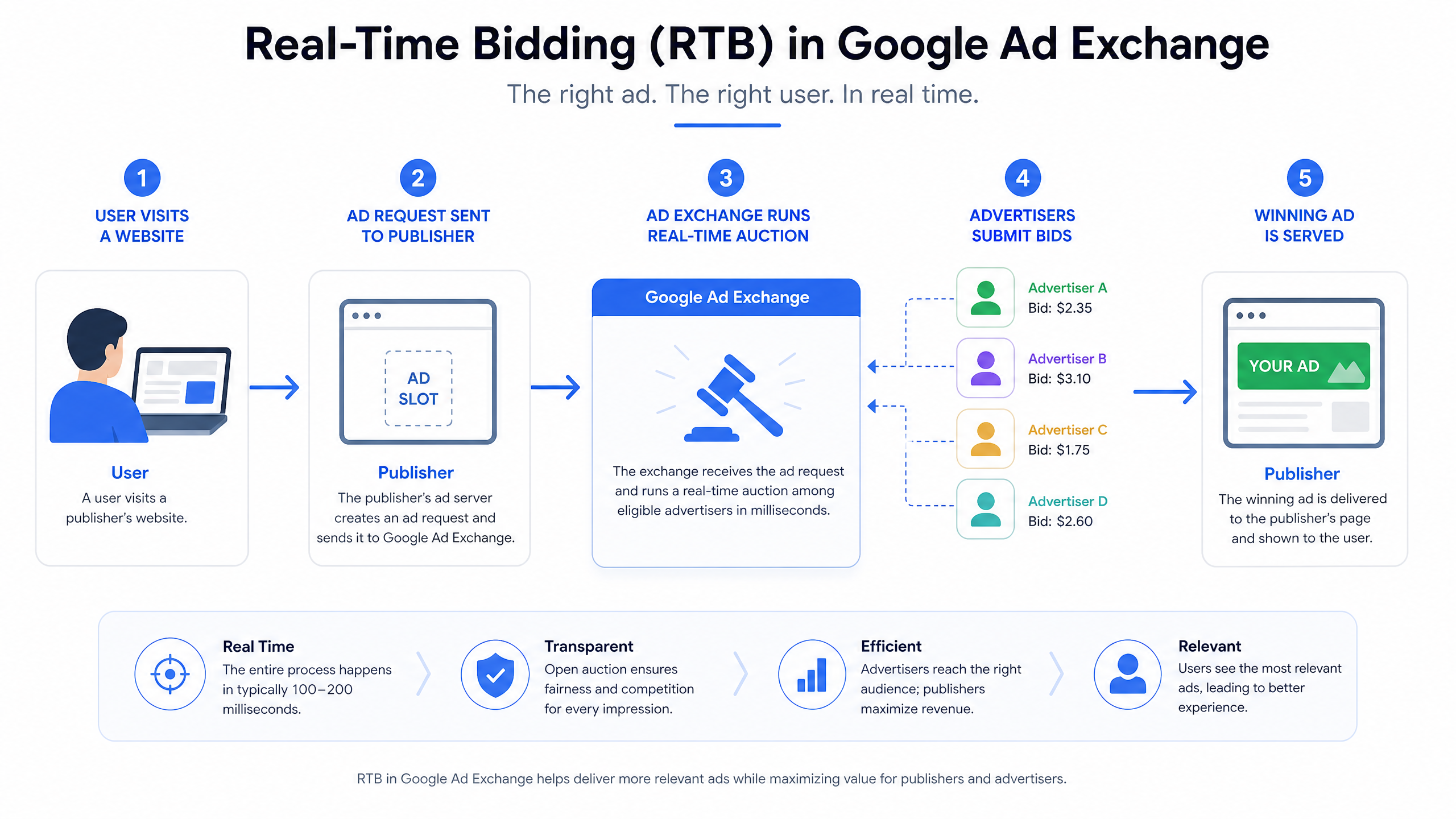
Figure 1: Illustration of the Real-Time Bidding process in Google Ad Exchange.
3. Google Ad Exchange vs. Google AdSense vs. Google Ads: A Clear Distinction
While all three are part of Google’s vast advertising ecosystem, Google Ad Exchange, Google AdSense, and Google Ads serve distinct purposes and cater to different stakeholders. Understanding these differences is crucial for publishers to make informed monetization decisions.
Google Ads (Formerly Google AdWords)
Google Ads is primarily an advertiser-focused platform. It allows businesses and individuals to create, manage, and optimize advertising campaigns across Google’s network, including Search, Display, YouTube, and mobile apps. Advertisers use Google Ads to bid on keywords, define target audiences, set budgets, and design ad creatives. For publishers, Google Ads is a source of demand, as advertisers’ campaigns can ultimately appear on their sites through AdSense or AdX.
Google AdSense
Google AdSense is an entry-level monetization solution for publishers. It provides a straightforward way for website owners to display relevant ads on their sites with minimal setup. AdSense automatically matches ads to content and audience, simplifying the ad management process. It’s accessible to most website owners, making it ideal for small to medium-sized publishers or those just starting their monetization journey. However, AdSense offers less control over ad inventory, pricing, and demand sources compared to AdX.
Google Ad Exchange (AdX)
Google Ad Exchange is a premium programmatic marketplace designed for larger publishers with significant traffic and sophisticated monetization needs. It offers advanced features, greater control, and access to a wider pool of premium advertisers, including agencies and DSPs. AdX operates on a real-time bidding model, fostering intense competition for ad impressions, which typically results in higher CPMs and increased revenue for eligible publishers. Access to AdX is usually granted through certified partners or enterprise-level accounts, such as those offered by AdXApproval.com.
Here’s a comparative overview:
|
Feature
|
Google AdSense
|
Google Ad Exchange (AdX)
|
Google Ads
|
|
Primary User
|
Publishers (small to medium)
|
Publishers (large, premium)
|
Advertisers
|
|
Purpose
|
Easy ad monetization
|
Maximize revenue through premium demand & RTB
|
Create & manage ad campaigns
|
|
Access
|
Open, self-serve
|
Restricted, typically via certified partners or enterprise
|
Open, self-serve
|
|
Control
|
Limited
|
High (pricing rules, blocking, demand sources)
|
High (targeting, bidding, creatives)
|
|
Demand Source
|
Google’s advertiser network
|
Broader pool (Google Ads, agencies, DSPs)
|
Advertisers’ campaigns
|
|
Revenue Model
|
Contextual matching, lower CPMs
|
Real-time bidding, higher CPMs
|
Cost-per-click (CPC), Cost-per-impression (CPM)
|
|
Complexity
|
Low
|
High
|
Medium to High
|
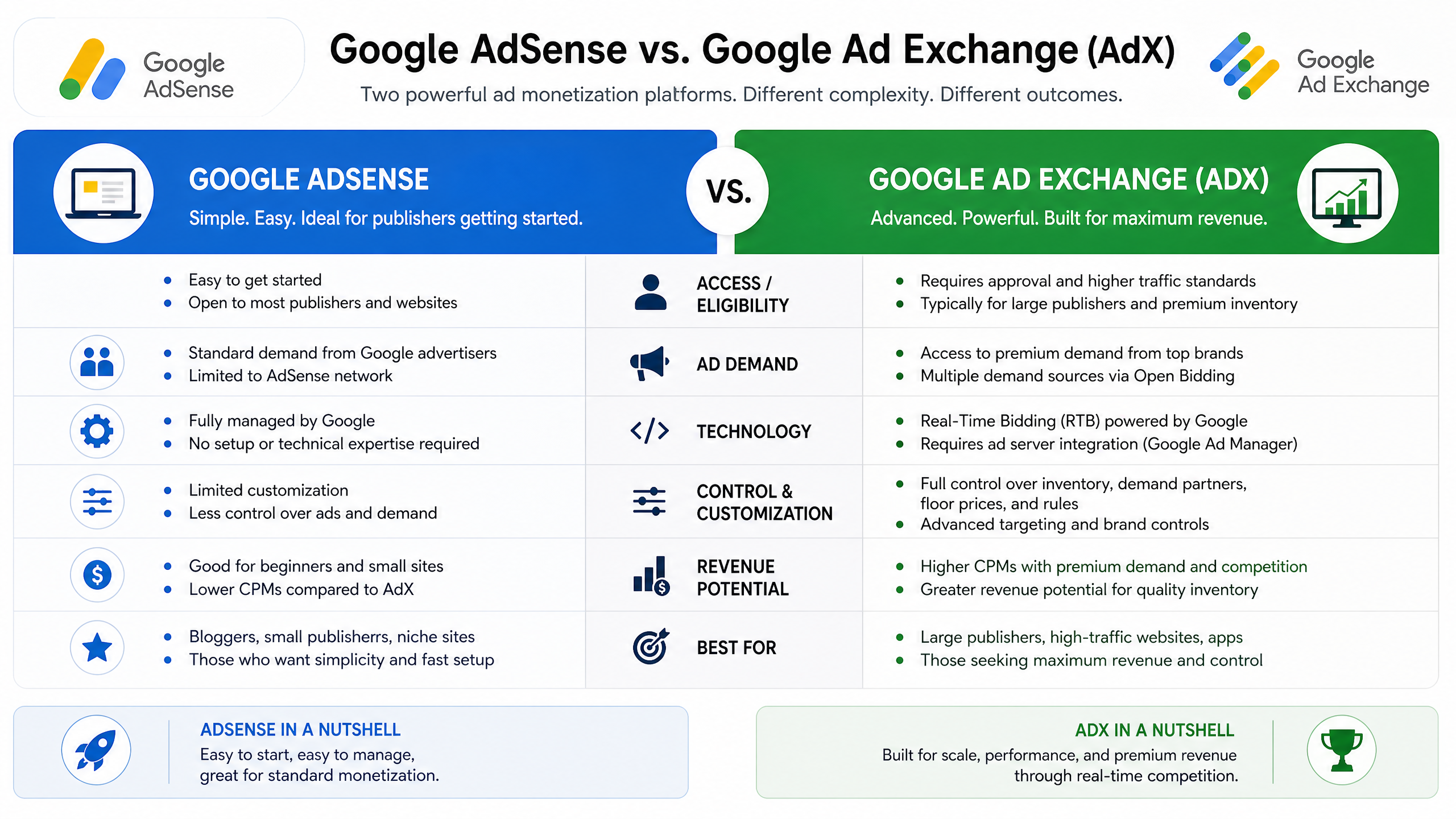
Figure 2: A comparison of Google AdSense and Google Ad Exchange (AdX).
4. Unlocking Premium Demand: Key Benefits for Publishers
For publishers aiming to elevate their monetization strategy, Google Ad Exchange offers a compelling suite of benefits that significantly outperform traditional ad networks.
Higher CPMs and Increased Revenue
The most significant advantage of Google Ad Exchange is its ability to generate higher CPMs. The real-time bidding environment, coupled with a vast pool of diverse demand sources (including major brands and agencies), creates intense competition for your ad inventory. This competition naturally drives up the price advertisers are willing to pay for each impression, directly translating to increased revenue for publishers. Publishers often report a substantial uplift in earnings after migrating to AdX from AdSense.
Access to Premium Advertisers and Brand Demand
AdX connects publishers to a higher tier of advertisers, including Fortune 500 companies and large advertising agencies. These premium advertisers often have larger budgets and are willing to pay more for high-quality, brand-safe inventory. By accessing this premium demand, publishers can secure more lucrative deals and improve the overall quality of ads displayed on their sites, enhancing user experience and brand perception.
Enhanced Control and Flexibility
Google Ad Exchange provides publishers with extensive control over their ad inventory. Through Google Ad Manager, publishers can:
•Set Floor Prices: Define minimum prices for their ad impressions, ensuring they never sell inventory below a certain threshold.
•Implement Blocking Controls: Block specific ad categories, advertisers, or ad creatives that do not align with their brand values or content.
•Prioritize Demand: Manage and prioritize different demand sources, including direct deals, AdSense, and various AdX buyers, to optimize yield.
•Targeting Options: Leverage advanced targeting capabilities to sell specific audience segments at higher prices.
This level of control allows publishers to maintain brand integrity while maximizing their earning potential.
Greater Transparency
AdX offers publishers more transparency into their ad performance. Detailed reporting provides insights into which advertisers are bidding, winning, and the prices paid. This data empowers publishers to make informed decisions about their inventory management and optimization strategies. This transparency is a stark contrast to the often opaque nature of traditional ad networks.
Global Reach and Diverse Demand
With Google Ad Exchange, publishers gain access to a global marketplace. Advertisers from around the world compete for impressions, ensuring a high fill rate regardless of the publisher’s geographic audience. This diverse demand minimizes reliance on a single advertiser or region, providing more stable and consistent revenue streams.
5. Eligibility and Access: Is Google Ad Exchange Right for You?
Unlike Google AdSense, which is relatively easy to join, Google Ad Exchange has stricter eligibility requirements. It is designed for established publishers with significant traffic and a commitment to high-quality content and user experience. Direct access to AdX is typically reserved for very large publishers or those with enterprise-level Google Ad Manager accounts. For most publishers, the pathway to AdX is through a certified Google AdX partner.
Key Eligibility Criteria (General Guidelines):
•High Traffic Volume: Publishers generally need substantial monthly page views and unique visitors. While specific numbers can vary, often millions of page views per month are expected.
•Quality Content: The website must feature original, high-quality content that adheres to Google’s content policies and provides value to users.
•Brand Safety: The site must be brand-safe, free from objectionable content, and maintain a positive user experience.
•Compliance with Policies: Strict adherence to Google Publisher Policies and other industry standards is mandatory.
•Google Ad Manager Account: Publishers typically need an active Google Ad Manager (GAM) account, as AdX integrates seamlessly with GAM for inventory management.
Accessing Google Ad Exchange Through a Certified Partner
For publishers who meet the quality and traffic requirements but do not have direct access, partnering with a certified Google AdX partner is the most common and effective route. These partners, like AdXApproval.com, have direct agreements with Google and can grant publishers access to AdX through their Multi-Customer Management (MCM) accounts. They handle the technical setup, optimization, and compliance, allowing publishers to focus on content creation.
Benefits of working with a certified partner include:
•Simplified Onboarding: Partners streamline the application and integration process.
•Expert Optimization: They provide expertise in setting up pricing rules, header bidding, and other advanced configurations to maximize revenue.
•Dedicated Support: Publishers receive ongoing support and guidance for troubleshooting and performance improvement.
•Access to Premium Demand: Partners aggregate demand from various sources, ensuring publishers benefit from the full competitive landscape of AdX.
If you’re considering upgrading your monetization, evaluating your eligibility and exploring partnership options with entities like AdXApproval.com is a crucial first step.
6. Optimizing Your Google Ad Exchange Performance
Once integrated with Google Ad Exchange, the journey to maximizing revenue doesn’t end. Continuous optimization is key to sustaining high CPMs and fill rates. Here are critical strategies publishers should employ:
Implement Header Bidding
Header bidding is a technique that allows multiple demand sources (including AdX and other ad exchanges/SSPs) to bid on ad inventory simultaneously before the ad server call. This increases competition and ensures publishers capture the highest possible bid for each impression. Implementing header bidding effectively requires technical expertise, often provided by AdX partners.
Dynamic Floor Pricing
Instead of static floor prices, dynamic floor pricing adjusts the minimum bid price based on various factors like audience, ad unit, time of day, and historical performance. This strategy ensures that valuable impressions are sold at a higher price, while less valuable ones still get filled, optimizing overall yield. Google Ad Manager, in conjunction with AdX, allows for sophisticated dynamic pricing rules.
Ad Unit Optimization
•Ad Placement: Strategically place ad units in high-visibility areas without disrupting user experience. Above-the-fold placements and sticky ads often perform well.
•Ad Sizes: Utilize a variety of IAB-standard ad sizes, including responsive units, to cater to different devices and maximize fill rates. Common high-performing sizes include 300×250, 336×280, 728×90, and 970×250.
•Ad Refresh: Implement intelligent ad refresh mechanisms for certain ad units, refreshing ads after a user-defined time or specific user actions, to increase impression opportunities. This must be done carefully to avoid negatively impacting user experience or violating policies.
Brand Safety and Ad Quality Controls
Maintain strict brand safety controls within Google Ad Manager to prevent undesirable ads from appearing on your site. Blocking sensitive categories, specific advertisers, or general ad types can protect your brand reputation and improve user trust. While this might slightly reduce fill rates, the long-term benefits of a clean ad environment often outweigh the short-term revenue loss. Regularly review your blocking settings and ad creatives.
User Experience (UX) and Core Web Vitals
Google heavily emphasizes user experience. Websites with fast loading times, mobile-friendliness, and good Core Web Vitals (Largest Contentful Paint, First Input Delay, Cumulative Layout Shift) tend to rank higher and attract more engaged users. Better UX leads to longer session durations and more page views, which in turn means more ad impressions and higher revenue potential from Google Ad Exchange. Ensure your website is optimized for speed and responsiveness.
Regular Performance Monitoring and A/B Testing
Continuously monitor your AdX performance metrics, including CPM, fill rate, and revenue. Use Google Ad Manager’s reporting features to identify trends, underperforming ad units, or potential issues. A/B test different ad placements, sizes, and pricing strategies to find what works best for your specific audience and content. This iterative approach is crucial for sustained growth.
7. The Future of Programmatic Advertising and Google Ad Exchange
The programmatic advertising landscape is constantly evolving, driven by technological advancements, privacy regulations, and changing consumer behaviors. Google Ad Exchange remains at the forefront of these changes, adapting to new challenges and opportunities.
Privacy-Centric Advertising
With the deprecation of third-party cookies and increasing privacy concerns, AdX is actively transitioning towards privacy-preserving advertising solutions. This includes leveraging first-party data, contextual targeting, and Google’s Privacy Sandbox initiatives. Publishers should focus on building strong first-party data strategies and ensuring their websites are compliant with global privacy regulations like GDPR and CCPA.
Advanced AI and Machine Learning
AI and machine learning are becoming increasingly integral to programmatic advertising. AdX utilizes these technologies for predictive analytics, bid optimization, and fraud detection. Publishers can benefit from these advancements by allowing AdX to intelligently optimize their inventory, leading to more efficient monetization and reduced operational overhead.
Video and Connected TV (CTV) Monetization
As video consumption continues to surge, Google Ad Exchange is expanding its capabilities in video and Connected TV (CTV) advertising. Publishers with video content or those planning to enter the CTV space will find AdX an essential platform for monetizing these premium formats. This represents a significant growth area for future ad revenue.
Unified Programmatic Strategies
The trend towards unified programmatic strategies, where all demand sources (direct deals, AdX, other exchanges) compete in a single auction, will continue to grow. Google Ad Manager’s unified auction model, powered by AdX, helps publishers simplify their ad stack and maximize yield by ensuring true competition for every impression. This holistic approach is vital for navigating the complexities of modern ad monetization.
Conclusion
Google Ad Exchange is an incredibly powerful tool for publishers seeking to elevate their ad monetization strategy beyond the basics. By offering access to premium demand, real-time bidding, and extensive control, AdX empowers publishers to achieve significantly higher CPMs and overall revenue. While it comes with stricter eligibility requirements and a steeper learning curve than AdSense, the benefits for established, high-quality publishers are undeniable. Partnering with a certified AdX specialist, such as AdXApproval.com, can simplify the integration and optimization process, allowing publishers to fully harness the potential of this dynamic marketplace. As the digital advertising landscape continues to evolve, embracing advanced programmatic solutions like Google Ad Exchange will be paramount for sustained success and growth in 2026 and beyond.
References
1.Newor Media. (2026, February 17). What Is Google AdX? | Google Ad Exchange Explained for Publishers. Retrieved from https://newormedia.com/blog/what-is-google-adx/
2.Amazon Ads. (n.d.). What is an ad exchange? Learn how they work. Retrieved from https://advertising.amazon.com/library/guides/ad-exchange
3.AdXApproval. (n.d.). AdXApproval – AdXApproval. Retrieved from https://adxapproval.com
Keywords: Google Ad Exchange, AdX, programmatic advertising, publisher monetization, real-time bidding, higher CPMs, ad revenue, Google AdSense, Google Ads, adxapproval.com