Unbeatable AdX vs Ezoic Comparison: 2026’s Ultimate Guide for Publishers
Introduction: Navigating the Ad Monetization Landscape with AdX vs Ezoic Comparison
In the ever-evolving digital publishing world, maximizing ad revenue is paramount. Publishers constantly seek the most effective platforms to optimize their earnings, and two names frequently emerge at the forefront of this discussion: Google Ad Exchange (AdX) and Ezoic. This comprehensive AdX vs Ezoic Comparison for 2026 aims to provide an in-depth analysis, offering an unbeatable perspective, helping you understand which platform is the superior choice for your website’s monetization strategy. This AdX vs Ezoic Comparison will empower publishers to make informed decisions. We will delve into their core functionalities, advantages, disadvantages, and suitability for various publisher profiles, ensuring you make an informed decision to boost your revenue.
Table of Contents
1.Introduction: Navigating the Ad Monetization Landscape with AdX vs Ezoic Comparison
2.Understanding Google AdX: The Premium Marketplace
3.Exploring Ezoic: AI-Powered Optimization for Publishers
4.Key Differences in AdX vs Ezoic Comparison
•Access and Requirements
•Revenue Optimization and Technology
•Features and Tools
•Support and User Experience
5.AdX vs Ezoic Comparison: Which is Right for Your Website?
•When to Choose AdX
•When to Choose Ezoic
6.Maximizing Your Ad Revenue: A Holistic Approach
7.Conclusion: Making an Informed Decision in the AdX vs Ezoic Comparison
Understanding Google AdX: The Premium Marketplace
Google Ad Exchange (AdX) is a sophisticated, real-time bidding marketplace where publishers sell their ad inventory to a vast network of advertisers and ad networks. It represents the premium tier of Google’s advertising ecosystem, offering access to high-quality demand and often leading to higher CPMs (Cost Per Mille) compared to standard AdSense. Publishers typically access AdX through Google Ad Manager (GAM) and often require a Google Certified Publishing Partner (GCPP) or a Multi-Customer Management (MCM) partner to gain entry. This partnership model ensures that only reputable publishers with significant traffic and adherence to Google’s policies can leverage the platform’s full potential.
AdX provides publishers with greater control over their ad inventory, allowing for advanced targeting, block controls, and the ability to set floor prices. This level of granularity helps publishers protect their brand, maintain user experience, and ultimately drive higher revenue. The direct access to a wider pool of premium advertisers means increased competition for ad impressions, which translates into better earnings for publishers. For those looking to upgrade their monetization, understanding the nuances of AdX is crucial for any publisher aiming for higher earnings 1. This makes the AdX vs Ezoic Comparison a critical topic.
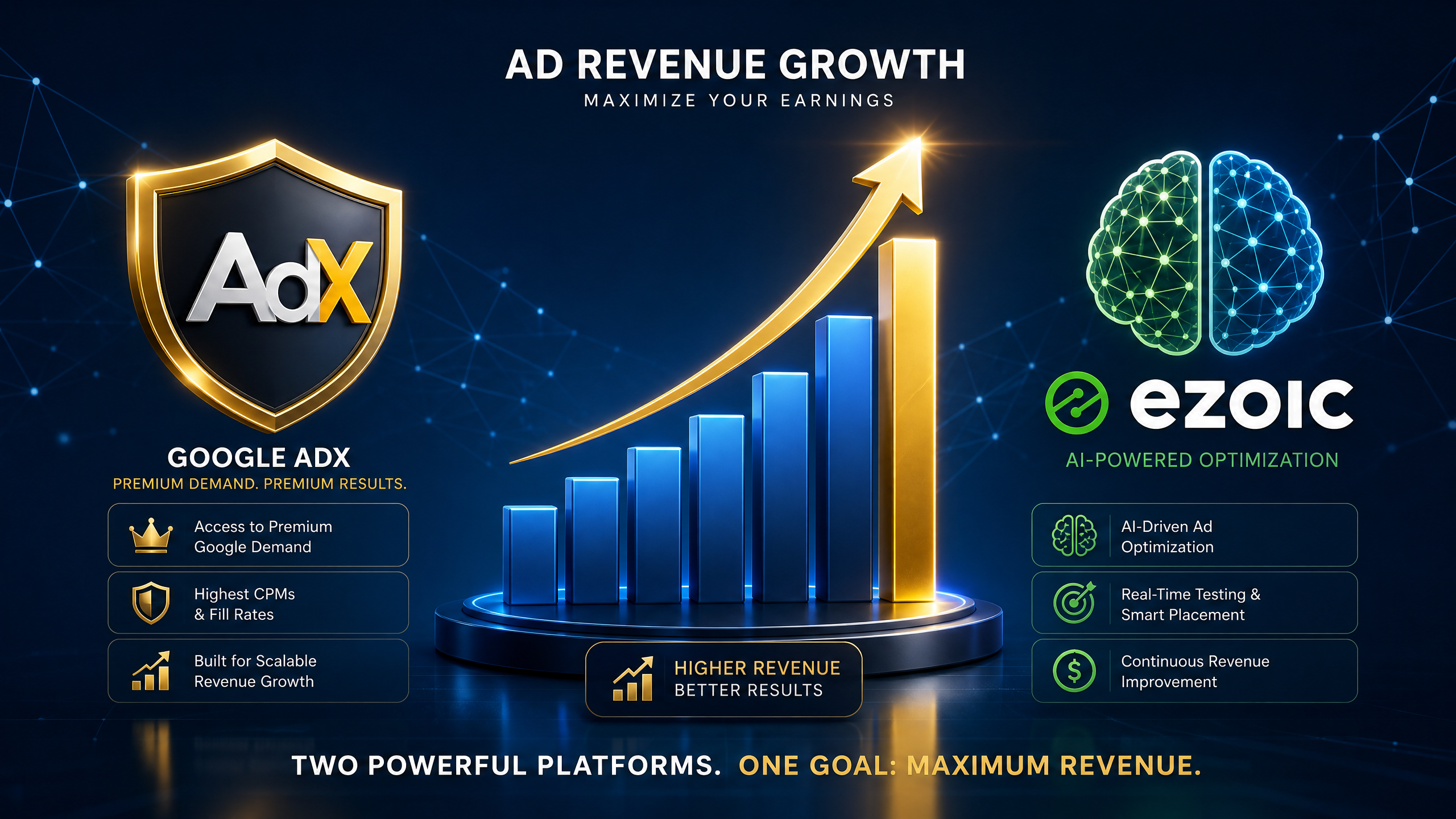
Exploring Ezoic: AI-Powered Optimization for Publishers
Ezoic is an AI-driven platform designed to help publishers optimize their websites for both user experience and ad revenue. Unlike AdX, which is primarily an ad exchange, Ezoic offers a comprehensive suite of tools that go beyond just ad serving. It uses machine learning to test thousands of ad placements, formats, and combinations, dynamically adjusting them to maximize earnings while improving site speed and user engagement. Ezoic aims to simplify complex ad operations, making advanced optimization accessible to a broader range of publishers, including those with moderate traffic.
Ezoic’s platform includes features like intelligent ad placement, layout testing, site speed acceleration (Leap), and big data analytics. It integrates with Google AdSense and AdX, allowing publishers to tap into premium demand through Ezoic’s own MCM partnership. This means publishers can benefit from AdX demand without directly managing a GAM account or finding a separate GCPP. Ezoic’s
approach is particularly beneficial for publishers who want to leverage advanced optimization techniques without the technical overhead 2.
Key Differences in AdX vs Ezoic Comparison
To truly understand the AdX vs Ezoic Comparison, it’s essential to break down their core differences across several critical aspects. This detailed AdX vs Ezoic Comparison will cover key areas.
Access and Requirements
Google AdX: Access to AdX is typically more restrictive. Publishers often need to have a Google Ad Manager 360 account and either directly qualify for AdX (which usually requires very high traffic, often in the tens of millions of pageviews per month) or partner with a Google Certified Publishing Partner (GCPP) or an MCM partner. These partners act as intermediaries, granting smaller publishers access to AdX demand. The approval process can be stringent, focusing on traffic quality, content, and policy compliance. For instance, some MCM partners might require a minimum of 25,000 to 100,000 monthly pageviews 3.
Ezoic: Ezoic has a more accessible entry point. While they previously had a 10,000 monthly pageview requirement, their
Access Now program allows publishers with fewer than 10,000 monthly visitors to join. This makes Ezoic a viable option for smaller and growing websites looking to optimize their ad revenue from the outset. The approval process is generally less rigorous than direct AdX access, focusing on content quality and adherence to Google’s policies.
Revenue Optimization and Technology
Google AdX: AdX itself is a marketplace, and its optimization capabilities are largely dependent on how publishers (or their MCM partners) configure Google Ad Manager. This includes setting up dynamic allocation, header bidding, floor pricing, and managing ad unit refresh rates. While AdX offers premium demand, achieving optimal revenue requires significant technical expertise and continuous management. Publishers have direct control over these settings, allowing for highly customized strategies.
Ezoic: Ezoic’s core strength lies in its AI-driven optimization. Its machine learning algorithms continuously test and adapt ad placements, sizes, and types to maximize revenue per visitor (EPMV) while considering user experience metrics like bounce rate and page views per visit. This automated approach removes much of the manual effort and technical complexity associated with ad optimization. Ezoic integrates with various ad networks, including AdSense and AdX, to ensure publishers always get the highest bids for their inventory. This intelligent system aims to find the sweet spot between ad density and user engagement, leading to sustainable revenue growth.
Features and Tools
Google AdX: The primary feature of AdX is access to a premium ad exchange. Through Google Ad Manager, publishers gain tools for inventory management, detailed reporting, audience segmentation, and direct deal management. It’s a robust platform for managing complex ad operations, but it requires a deep understanding of ad tech to leverage effectively. Features are focused on ad serving and inventory control.
Ezoic: Ezoic offers a broader suite of tools beyond just ad monetization. These include:
•Ad Tester: AI-driven optimization of ad placements, sizes, and types.
•Leap: A site speed acceleration tool designed to improve Core Web Vitals.
•Big Data Analytics: Comprehensive insights into ad performance, user behavior, and content engagement.
•Ezoic Video: Tools for video monetization.
•SEO Tools: Features aimed at improving search engine rankings.
Ezoic positions itself as an all-in-one platform for website growth, integrating various aspects of publishing beyond just ad revenue.
Support and User Experience
Google AdX: Direct support for AdX is typically provided through Google Ad Manager support channels, which can be limited for smaller publishers. Publishers working with MCM partners receive support from their respective partners. The user interface of Google Ad Manager can be complex and intimidating for those new to ad operations.
Ezoic: Ezoic offers various support channels, including a knowledge base, community forums, and direct support for higher-tier publishers. Their platform is designed to be more user-friendly, with dashboards and tools that simplify complex ad optimization tasks. However, some users have reported that the sheer number of features can sometimes lead to a steeper learning curve, and the integration process can be complex due to its comprehensive nature.
AdX vs Ezoic Comparison: Which is Right for Your Website?
Choosing between AdX and Ezoic depends heavily on your website’s specific needs, traffic volume, technical expertise, and monetization goals. This AdX vs Ezoic Comparison highlights that both platforms offer significant advantages, but cater to different publisher profiles. A thorough AdX vs Ezoic Comparison is vital for strategic planning.
When to Choose AdX
•Technical Expertise: Publishers with in-house ad operations teams or strong technical knowledge to manage Google Ad Manager configurations, header bidding, and floor pricing will benefit most from the granular control AdX provides.
•Brand Control: If maintaining absolute control over ad types, advertisers, and user experience is a top priority, AdX allows for precise blocking controls and direct deal management.
•Existing Ad Manager Setup: If you already have a sophisticated Google Ad Manager setup and are looking to upgrade your demand sources, integrating AdX is a natural progression.
When to Choose Ezoic
•Growing Publishers: Ezoic is an excellent choice for small to medium-sized publishers (even those with fewer than 10,000 monthly visitors through Access Now) who want to maximize revenue without extensive technical knowledge.
•Automated Optimization: If you prefer an automated, AI-driven approach to ad optimization that handles testing and adjustments for you, Ezoic’s platform is designed for this.
•All-in-One Solution: Publishers looking for a comprehensive suite of tools that includes ad optimization, site speed improvement, analytics, and even SEO features will find Ezoic appealing.
•Focus on User Experience: Ezoic’s AI aims to balance ad revenue with user experience, dynamically adjusting ads to prevent negative impacts on bounce rate and engagement.
Maximizing Your Ad Revenue: A Holistic Approach
Regardless of whether you choose AdX or Ezoic, a holistic approach to ad monetization is crucial for long-term success. This involves:
•Content Quality: High-quality, engaging content attracts more visitors and keeps them on your site longer, leading to more ad impressions and higher revenue.
•User Experience: A fast, responsive, and user-friendly website is essential. Slow loading times or intrusive ads can drive visitors away, negatively impacting your earnings. Ezoic’s Leap tool can assist with this, and proper Ad Manager configuration for AdX can also minimize latency.
•SEO Optimization: Driving organic traffic through effective SEO is fundamental. The more relevant visitors you attract, the greater your monetization potential. Remember to use your focus keyword, “AdX vs Ezoic Comparison,” throughout your content, in headings, and in image alt text to improve search engine visibility.
•Diversification: While AdX and Ezoic are powerful, consider diversifying your revenue streams beyond display advertising, such as affiliate marketing, sponsorships, or direct sales.
•Continuous Monitoring and Testing: The ad landscape is constantly changing. Regularly monitor your performance metrics, test new strategies, and adapt to industry trends to ensure optimal revenue. Both platforms offer robust analytics to aid in this.

Conclusion: Making an Informed Decision in the AdX vs Ezoic Comparison
In conclusion, both Google AdX and Ezoic offer compelling solutions for publishers aiming to maximize their ad revenue. The AdX vs Ezoic Comparison reveals that AdX provides unparalleled access to premium demand and granular control for large, technically proficient publishers, often facilitated by MCM partners like Adxapproval. For more insights on gaining AdX access, visit Adxapproval. You can also explore their About Us page to understand their services better. When considering an upgrade from AdSense, Adxapproval offers specialized services. The AdX vs Ezoic Comparison is crucial for publishers, and platforms like Adxapproval help bridge the gap to premium monetization. Publishers seeking to maximize their revenue often turn to experts like those at Adxapproval for guidance. This makes the AdX vs Ezoic Comparison even more relevant for making informed decisions. Ezoic, on the other hand, democratizes advanced ad optimization through its AI-driven platform, making it an excellent choice for growing publishers seeking an all-in-one solution with automated efficiency. Your ultimate decision should align with your website’s current stage, technical capabilities, and long-term growth strategy. By carefully evaluating the strengths of each platform, you can confidently choose the path that will lead to the most profitable and sustainable ad monetization for your digital property.
References
Footnotes
1.Google MCM for Publishers: Complete 2026 Guide to Accessing AdX – Magicbid.ai ↩
2.Best Google AdSense Alternatives for Publishers (2026) – Clickio Blog ↩
3.9 Best Google MCM Partners For Publishers (2026) – Blogging Note ↩