7 Proven AdX Revenue Increase Tips: Master Publisher Monetization Strategy in 2026
Unlocking Maximum AdX Revenue for Publishers
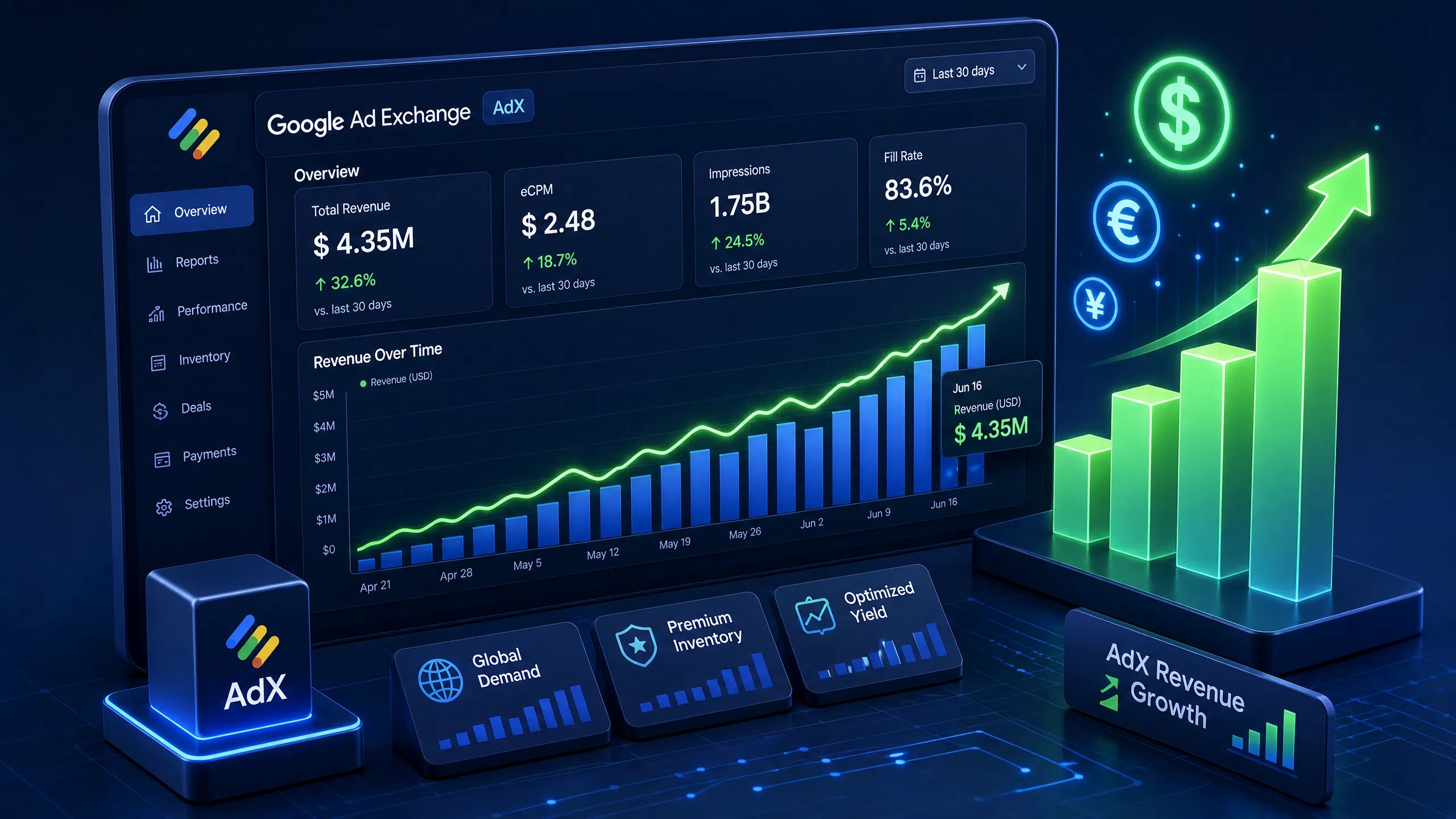
In the dynamic world of digital publishing, maximizing AdX revenue increase tips and optimizing your publisher monetization strategy are paramount for sustainable growth. Google Ad Exchange (AdX) stands as a powerful platform, offering publishers a sophisticated marketplace to sell their ad inventory. Unlike Google AdSense, which acts as a managed ad network, AdX operates as a real-time bidding (RTB) exchange. This fosters intense competition among demand-side platforms (DSPs) and ad networks, directly translating to higher ad revenue for publishers. This comprehensive guide will delve into seven proven strategies to significantly boost your AdX earnings and refine your overall publisher monetization strategy in 2026.
1. Understanding Google AdX Performance Metrics
Before diving into optimization, it’s crucial to understand how to analyze your current AdX performance. Google Ad Manager (GAM) reports are your primary tool for this. By examining key metrics, publishers can identify areas for improvement and gauge the effectiveness of their publisher monetization strategy.
Key Metrics to Monitor in Ad Manager
|
Metric
|
Description
|
Why it Matters
|
|
Ad Requests
|
Total times an ad was requested.
|
Shows potential reach.
|
|
Matched Requests
|
Requests successfully filled.
|
Indicates demand levels.
|
|
Ad Impressions
|
Times an ad was actually displayed.
|
The basis for revenue.
|
|
Coverage (Fill Rate)
|
% of requests that resulted in an ad.
|
High fill rate = less wasted space.
|
|
eCPM
|
Revenue per 1,000 impressions.
|
Measures inventory value.
|
|
Estimated Revenue
|
Total revenue generated.
|
Your bottom line.
|
To access these insights, navigate to Google Ad Manager, create a new report, and select dimensions like “Request sources” and metrics such as “Ad requests,” “Matched requests,” and “eCPM.” Regular analysis of these reports is the foundation of any successful publisher monetization strategy.
2. Optimizing AdX Inventories for Higher Yield
To truly optimize your Google Ad Exchange revenue, it’s essential to unlock the potential of various ad types and formats. It isn’t just about filling spaces; it’s about making strategic choices with the ad types and formats you use. This is one of the most effective AdX revenue increase tips.
Explore Different Ad Types & Backup Ads
Publishers can choose to serve either Image/Rich media ads only or Image/Rich media & text ads. Enabling Backup ads ensures that your AdX inventory doesn’t remain unfilled due to a lack of eligible line items. You can configure backup ads to show a blank space or ads from another URL, maintaining a seamless user experience while maximizing revenue potential. For small publishers, using AdX for best small publishers through an MCM partner can provide access to premium demand that isn’t available on AdSense.
Play Around with Different Ad Formats
Experimenting with different ad formats is a key AdX revenue increase tip. While above-the-fold ads are traditionally favored, below-the-fold ads can also achieve high viewability, especially on mobile devices. Consider implementing sticky mobile ads, which can score up to 90% viewability. Additionally, out-stream video ads often command higher eCPMs than standard display ads, making them a valuable addition to your inventory.
3. Strategic Rule Optimization in Google Ad Manager
Google Ad Manager allows publishers to set various blocking, opt-in, and pricing rules. These rules directly impact AdX revenue and should be carefully optimized as part of your publisher monetization strategy.
Optimizing Blocking Rules for Maximum Demand
While it’s important to maintain a brand-safe environment, blocking entire categories of advertisers can unnecessarily limit competition and revenue. Instead of broad category blocks, consider blocking specific URLs or increasing the price floor for certain advertisers. Over-blocking is a common mistake that hurts the AdX revenue increase tips effectiveness.
Optimizing Auction Pricing Rules
Pricing rules are a major factor affecting AdX revenue. Maintain a simple structure and set default pricing values low enough to encourage high fill rates. Differentiate rules based on devices and geographies, as performance varies across these segments. Labeling inventory as “Branded” (showing the full URL) or “Semi-transparent” (showing the root domain) allows you to set appropriate price floors. Branded inventory generally commands higher prices because advertisers value knowing exactly where their ads appear. You can learn more about Google Ad Exchange Requirements to ensure your site is ready for premium pricing.
4. Leveraging Open Bidding for Enhanced Competition
Open Bidding is Google’s solution to header bidding, allowing publishers to integrate multiple demand sources in real-time directly within AdX. This setup fosters intense competition for your ad inventory, reducing latency and potentially increasing your CPMs.
How to Implement Open Bidding
1.Access Google Ad Manager: Navigate to the “Inventory” section to find Open Bidding settings.
2.Enable Open Bidding: Ensure it’s enabled for the relevant line items or ad units.
3.Set Up Partners: Add certified demand partners and configure key settings like revenue share and timeout.
4.Monitor and Optimize: Track metrics like fill rate, CPM, and bid response time. Use A/B testing to refine settings and maximize revenue.
By allowing third-party exchanges to compete with AdX in a single auction, you drive up the price of every impression, which is a core component of a modern publisher monetization strategy.
5. Maximizing Ad Viewability and User Experience
Ad viewability is a critical factor determining the value of your ad inventory. Google AdX prioritizes high-viewability impressions, meaning optimizing for viewability allows you to command higher CPMs. This is a top AdX revenue increase tip for 2026.
Strategies for High Viewability
•Implement Sticky Ads: These ads remain visible as the user scrolls, significantly increasing viewability rates. Ensure they are unobtrusive to maintain a positive user experience.
•Strategic Placement: Place a significant portion of ads “above the fold” and within the content flow, especially in longer articles where users are highly engaged.
•Lazy Loading: Implement lazy loading for ads to ensure they only load when they are about to enter the viewport. This improves page speed, which is a key SEO factor.
High viewability doesn’t just help revenue; it also builds site trust with both users and advertisers.
6. Implementing Audience Segmentation and First-Party Data
Audience segmentation allows you to tailor your ad inventory to specific groups of users, making it more valuable to advertisers willing to pay a premium for targeted reach. This is a sophisticated part of any publisher monetization strategy.
Leveraging First-Party Data
Collect and analyze first-party data (demographics, browsing behavior, etc.) using tools like Google Analytics. Create custom audience segments in Google Ad Manager based on this data. By targeting these specific segments in your AdX campaigns, you ensure ads are served to the most relevant users, increasing the likelihood of higher bid rates and CPMs.
Why First-Party Data is Essential in 2026
With the phase-out of third-party cookies, first-party data has become the “new gold” for publishers. By understanding your audience, you can offer “Direct Deals” or “Private Marketplace” (PMP) access to advertisers, which often carry much higher CPMs than the open auction. This is a crucial AdX revenue increase tip for future-proofing your business.
7. Choosing the Right MCM Partner for Small Publishers
For many small to mid-sized publishers, direct access to Google AdX is difficult due to high traffic requirements. This is where Multiple Customer Management (MCM) partners come in.
Benefits of MCM Partners
•Access to AdX: They provide the “invite” needed to join the Ad Exchange.
•Expert Optimization: Partners like Adxapproval help manage your floor prices and ad layouts.
•Advanced Tools: Many partners offer proprietary technology to further boost yield.
•Policy Compliance: They help ensure your site stays within Google’s strict guidelines.
When selecting a partner, look for transparency in revenue sharing and a proven track record of helping sites similar to yours. A good partner is the cornerstone of a successful publisher monetization strategy.
Frequently Asked Questions (FAQ)
What is the difference between AdSense and AdX?
AdSense is an ad network where Google manages the demand, while AdX is an ad exchange where multiple demand sources (including AdSense) compete in real-time. AdX generally offers higher revenue potential through increased competition.
How can I increase my AdX CPM?
Focus on improving ad viewability, implementing floor price optimization, and leveraging Open Bidding. Additionally, enriching your inventory with first-party data can attract premium advertisers.
Does ad placement affect SEO?
Yes, excessive ads or intrusive placements can hurt your page speed and user experience, which are negative ranking factors for Google. Always balance monetization with a clean UX.
Is AdX better for small publishers?
While direct access is hard, using an MCM partner makes AdX accessible and often more profitable than AdSense for small publishers who have high-quality content.
Conclusion
Maximizing AdX revenue requires a multifaceted approach, combining strategic inventory management, rule optimization, and a deep understanding of audience behavior. By implementing these seven proven AdX revenue increase tips, publishers can significantly enhance their publisher monetization strategy, drive higher CPMs, and achieve sustainable growth in 2026 and beyond. Remember, the key to success lies in continuous testing and staying adaptable to the ever-changing ad tech landscape.