Mastering Search Arbitrage: 7 Proven Strategies for Explosive Growth
Search Arbitrage
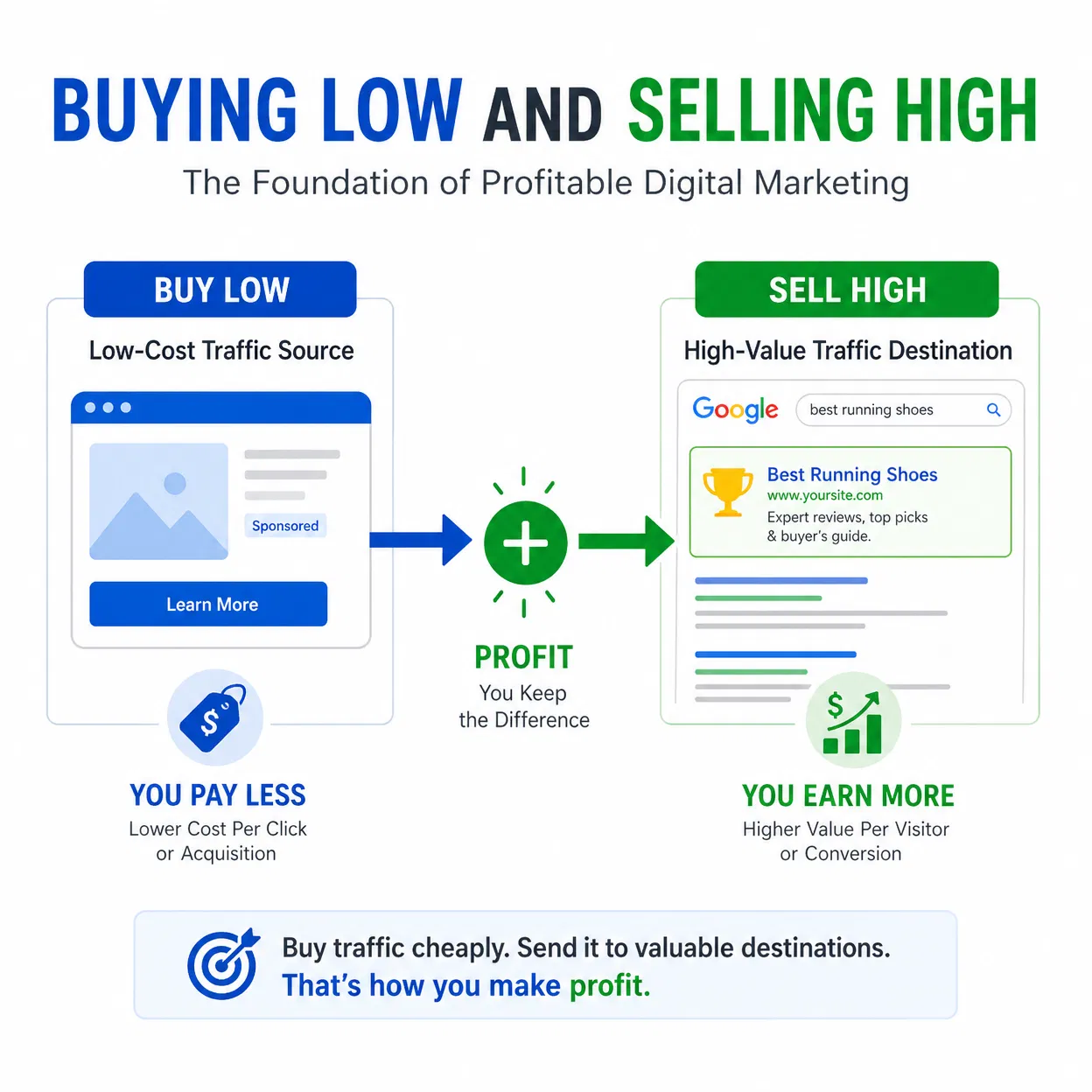
Search arbitrage is a dynamic digital marketing strategy that leverages the difference in cost between acquiring traffic and monetizing it through search engine results pages (SERPs). In essence, it involves buying web traffic at a lower cost from various sources and directing it to a search feed where advertisers pay a higher rate for clicks on their ads. This strategic approach allows affiliates and media buyers to generate profit by effectively bridging the gap between traffic acquisition costs and ad revenue. The core principle revolves around identifying user intent and matching it with relevant, high-value advertisements displayed on a search results page.
This guide will delve into the intricacies of search arbitrage, explaining its mechanics, key components, and offering 7 proven strategies to maximize profitability and ensure long-term success. We will also cover essential SEO considerations, compliance, and how to avoid common pitfalls to achieve explosive growth in your campaigns.
What Exactly is Search Arbitrage?
At its heart, search arbitrage is a sophisticated form of media arbitrage specifically focused on search intent. Unlike general media arbitrage, which might direct users to various offers or content pages, search arbitrage funnels users directly to SERPs. These pages are populated with paid advertisements, and when a user clicks on one of these ads, the advertiser pays the search feed provider. A portion of this revenue is then shared with the arbitrageur. The profitability hinges on the arbitrageur’s ability to acquire traffic at a cost lower than the revenue generated from the subsequent ad clicks.
The Mechanics of Search Arbitrage: A Step-by-Step Breakdown
The process of search arbitrage can be broken down into a clear, sequential flow:
1.Traffic Acquisition: The arbitrageur purchases traffic from various paid marketing channels. These sources can include native advertising platforms, social media ads, or even other search engines.
2.Redirection to Search Feed: The acquired traffic is then directed to a custom search feed. This feed is designed to display search results and ads relevant to the user’s initial query or intent.
3.User Engagement with Ads: Users, having arrived at the search feed, see a variety of paid advertisements. When they click on an ad that aligns with their interest, the advertiser is charged.
4.Revenue Generation: The search feed provider collects revenue from the advertiser for each click. A pre-determined portion of this revenue is then passed on to the arbitrageur.
The success of this model relies heavily on the quality and intent of the acquired traffic. Users who are actively seeking information or solutions are more likely to engage with the ads, leading to higher conversion rates and greater profitability for the arbitrageur.
One-Click vs. Two-Click Flows in Search Arbitrage
Understanding the difference between one-click and two-click flows is crucial for optimizing search arbitrage campaigns. The choice between these two models often depends on the initial intent of the traffic and the desired level of user qualification.
One-Click Flow
In a one-click flow, users are directed immediately from the traffic source to the search results page. This method is highly effective when the acquired traffic already possesses strong, clear intent. For instance, if a user clicks on an ad specifically for “best car insurance,” sending them directly to a SERP comparing car insurance providers is a natural and efficient path. This direct approach minimizes friction and can lead to higher click-through rates on the search feed ads, assuming the initial traffic is highly qualified.
Two-Click Flow
A two-click flow introduces an intermediary step, typically a pre-landing page, before the user reaches the search feed. This approach is particularly useful when the initial traffic has broader intent or requires further qualification. For example, if a user clicks on a native ad with a general headline like “compare home warranty options,” they might first land on a pre-lander where they select their location or specific needs. This additional step helps to refine user intent, ensuring that by the time they reach the search feed, they are more engaged and their search queries are more targeted. While adding an extra click, this method often results in cleaner, higher-quality traffic, which can ultimately lead to better conversion rates and more profitable Search Arbitrage campaigns.
Choosing the Right Search Feed Provider
Selecting a reliable search feed provider is paramount to the success of any Search Arbitrage operation. The provider dictates the quality and relevance of the ads displayed, the revenue share model, and the compliance guidelines. A suboptimal provider can severely impact profitability, even with expertly sourced traffic. Key considerations when choosing a provider include:
•Clear Compliance Rules: Ensure the provider has well-defined guidelines regarding acceptable traffic sources, creatives, and user flows to prevent policy violations and account suspensions.
•Stable Payouts: Opt for providers with a track record of consistent and predictable revenue sharing, avoiding those with sudden drops in earnings due to ambiguous quality thresholds.
•Performance Visibility: Access to granular data, such as keyword-level clicks, revenue metrics, and engagement statistics, is crucial for effective campaign optimization.
•Responsive Support: A provider that offers proactive support, flags potential issues, and responds promptly to inquiries can be invaluable in maintaining campaign health.
•Flexibility in Setup: The ability to support both one-click and two-click flows allows for greater adaptability to different traffic sources and user intents.
Popular search feed providers in the Search Arbitrage space include Tonic, System1, Sedo, and Ads.com . Each offers unique features and strengths, making it essential to research and select one that aligns with your specific campaign objectives and traffic acquisition strategies.
Identifying Profitable Niches and Keywords for Search Arbitrage
The profitability of Search Arbitrage is heavily influenced by the selection of niches and keywords. Successful niches typically exhibit strong advertiser demand and clear user intent. These are areas where consumers are actively seeking solutions, and advertisers are willing to pay a premium for visibility.
Evergreen niches that consistently perform well in Search Arbitrage include:
•Insurance and Finance: Auto insurance, health insurance, loans, credit cards.
•Legal Services: Personal injury, immigration, family law.
•Health and Wellness: Weight loss, nutrition, supplements, fitness.
•Home Services: Roofing, plumbing, HVAC, pest control.
•Technology and Software: Antivirus, VPNs, SaaS tools.
•Travel and Mobility: Flights, car rentals, hotels, relocation services.
Once a niche is identified, keyword selection becomes critical. The goal is to match keywords with user expectations and advertiser bids. Broad or misleading terms may generate clicks but yield low conversions. Conversely, long-tail keywords, while having lower individual search volume, often indicate higher user intent and can lead to significantly better conversion rates. For example, “best renters insurance for apartments” is more likely to convert than a generic “home insurance” query . Tools like Google Keyword Planner can assist in identifying high-CPC (Cost Per Click), low-competition keywords.
 Traffic Sources for Search Arbitrage
Choosing the right traffic source is as important as selecting the right keywords. The source determines the initial intent of the users and the level of pre-qualification required before directing them to the search feed. Some traffic sources are inherently better suited for Search Arbitrage due to their alignment with search-like intent.
Key traffic sources to consider include:
•Native Ads: These advertisements blend seamlessly with editorial content, making them less intrusive and often leading to higher engagement. Native ads can be an excellent source of traffic for a two-click Search Arbitrage flow, allowing for pre-qualification on a landing page.
•Social Media Ads: Platforms like Facebook, Instagram, and TikTok offer granular targeting options, enabling arbitrageurs to reach specific demographics with tailored ads. While often requiring a two-click flow, social media can provide a vast pool of potential traffic.
•Display Ads: These visual advertisements appear on various websites and apps. While generally having lower intent than search traffic, strategic placement and compelling creatives can still yield profitable results, especially when paired with a robust two-click flow.
•Push Notifications: These direct messages sent to users’ devices can be highly effective for re-engaging audiences or promoting time-sensitive offers. Push traffic often benefits from a two-click flow to refine intent.
Each traffic source has its own nuances regarding cost, intent, and compliance. Continuous testing and optimization are essential to identify the most profitable combinations for your Search Arbitrage campaigns.
Preventing Ad Fraud and Ensuring Compliance in Search Arbitrage
Ad fraud poses a significant threat to the profitability of Search Arbitrage campaigns. Invalid clicks, bot traffic, and other fraudulent activities can quickly deplete budgets and lead to account suspensions. Implementing robust fraud prevention measures and adhering to compliance guidelines are crucial for sustainable success.
Strategies for Ad Fraud Prevention:
•IP Blocklists: Utilize IP blocklists to prevent known bot networks and fraudulent IP addresses from interacting with your ads.
•Click-Level Monitoring: Implement advanced tracking solutions to monitor click patterns and identify suspicious activity in real-time.
•Traffic Source Verification: Regularly audit your traffic sources to ensure they are legitimate and adhere to quality standards.
•Fraud Detection Tools: Employ specialized ad fraud detection tools that leverage machine learning to identify and filter out fraudulent impressions and clicks.
Ensuring Compliance:
•Ad Platform Policies: Strictly adhere to the advertising policies of platforms like Google, Facebook, and native ad networks. Violations can lead to account bans and loss of revenue.
•Search Feed Provider Guidelines: Understand and comply with the specific rules and requirements of your chosen search feed provider.
•Transparency: Maintain transparency in your ad creatives and landing pages, ensuring that users are not misled about the nature of the content they will encounter.
•Data Protection: Comply with data privacy regulations (e.g., GDPR, CCPA) when collecting and processing user data.
Proactive measures against ad fraud and a strong commitment to compliance are vital for protecting your investments and maintaining the integrity of your Search Arbitrage operations.
The Future of Search Arbitrage: Trends and Outlook
The landscape of Search Arbitrage is constantly evolving, driven by advancements in technology, changes in ad platform policies, and shifts in user behavior. Staying abreast of emerging trends is crucial for long-term success.
Key trends shaping the future of Search Arbitrage include:
•AI and Machine Learning: The increasing integration of AI and machine learning in ad platforms will enable more sophisticated targeting, bidding, and fraud detection, requiring arbitrageurs to adapt their strategies.
•Enhanced User Privacy: Growing concerns and regulations around user privacy will necessitate a greater focus on compliant data collection and targeting methods.
•Diversification of Traffic Sources: Reliance on a single traffic source will become riskier, prompting arbitrageurs to explore and diversify across a wider range of platforms.
•Focus on User Experience: Ad platforms are increasingly prioritizing user experience. Campaigns that offer genuine value and a seamless user journey will be favored.
•Vertical Integration: Some arbitrageurs may explore closer partnerships with search feed providers or even develop their own proprietary feeds to gain greater control and optimize profitability.
Despite challenges such as stricter policies and increased competition, Search Arbitrage remains a viable and potentially highly profitable strategy for those who are adaptable, data-driven, and committed to ethical practices. The key will be continuous learning, rigorous testing, and a focus on delivering value to both users and advertisers.
Conclusion: Unlocking Explosive Growth with Smart Search Arbitrage
Search Arbitrage offers a powerful avenue for digital marketers to generate significant revenue by intelligently navigating the ecosystem of paid traffic and search monetization. By understanding its fundamental mechanics, carefully selecting search feed providers, identifying lucrative niches and keywords, and strategically choosing traffic sources, arbitrageurs can build highly profitable campaigns.
Crucially, success in Search Arbitrage is not merely about exploiting price discrepancies; it’s about mastering the art of intent matching, optimizing user flows, and rigorously combating ad fraud while adhering to evolving compliance standards. The digital advertising landscape is dynamic, and continuous adaptation, coupled with a data-driven approach, will be the hallmarks of successful Search Arbitrage practitioners.
By implementing the 7 proven strategies outlined in this guide – from meticulous niche and keyword research to robust fraud prevention – you can unlock the full potential of Search Arbitrage and achieve explosive growth in your digital marketing endeavors.