7 Proven Ways to Boost Your AdX vs AdSense Earning in 2026
Are you a publisher looking to maximize your website’s revenue but stuck in the AdX vs AdSense earning debate? Choosing between Google AdSense and Google Ad Exchange (AdX) is one of the most critical decisions for any digital content creator. While AdSense is the go-to for beginners, AdX is often seen as the “holy grail” for established publishers seeking to unlock their site’s full monetization potential.
In this comprehensive guide, we will dive deep into the differences between these two platforms, analyze real-world earning potential, and provide you with actionable strategies to scale your revenue.
Table of Contents
What is Google AdSense?
Google AdSense is an ad network that allows publishers to place ads on their websites and earn revenue primarily through a Cost-Per-Click (CPC) model. It is designed to be user-friendly, making it the most popular choice for small to medium-sized blogs and niche websites.
Key Features of AdSense:
•Ease of Use: Simply add a piece of code to your site, and Google handles the rest.
•Low Entry Barrier: Almost any site with quality content can get approved.
•Automated Ads: Google uses machine learning to place ads where they are most likely to perform well.
What is Google AdX (Ad Exchange)?
Google AdX, formerly known as DoubleClick Ad Exchange, is a programmatic ad exchange that connects publishers with a vast pool of advertisers, agencies, and third-party ad networks. Unlike AdSense, which is an ad network, AdX operates as a real-time bidding (RTB) marketplace.
Alt Text: AdX vs AdSense earning comparison dashboard and revenue growth illustration
AdX vs AdSense Earning: The Core Differences
When comparing AdX vs AdSense earning potential, the fundamental difference lies in how the inventory is sold. AdSense typically pays for clicks, whereas AdX focuses on CPM (Cost Per Mille), where you earn for every 1,000 impressions.
|
Feature
|
Google AdSense
|
Google AdX
|
|
Revenue Model
|
Primarily CPC (Cost Per Click)
|
Primarily CPM (Cost Per Mille)
|
|
Auction Type
|
Single-buyer (Google Ads)
|
Multi-buyer (RTB, Private Auctions)
|
|
Control
|
Limited
|
Advanced (Floor prices, Direct deals)
|
|
Revenue Share
|
Fixed (68% for publishers)
|
Negotiable (typically higher)
|
|
Target Audience
|
Small to Medium Publishers
|
Large, Enterprise-level Publishers
|
The Revenue Share Factor
In AdSense, the revenue share is fixed: Google keeps 32%, and the publisher gets 68%. In the AdX vs AdSense earning landscape, AdX offers more flexibility. Large publishers can often negotiate better terms, and because of the increased competition from multiple buyers, the overall “pie” is usually much larger.
Why AdX Often Outperforms AdSense
The reason many “serious” publishers switch to AdX is simple: competition. In AdSense, you are limited to advertisers using Google Ads. In AdX, you have access to:
1.Google Ads
2.Third-party Ad Networks
3.Demand-Side Platforms (DSPs)
4.Agency Trading Desks
This increased demand leads to higher bid pressure, which naturally drives up your CPMs. According to industry data from Publift, publishers often see a 20% to 50% increase in revenue after migrating to AdX.
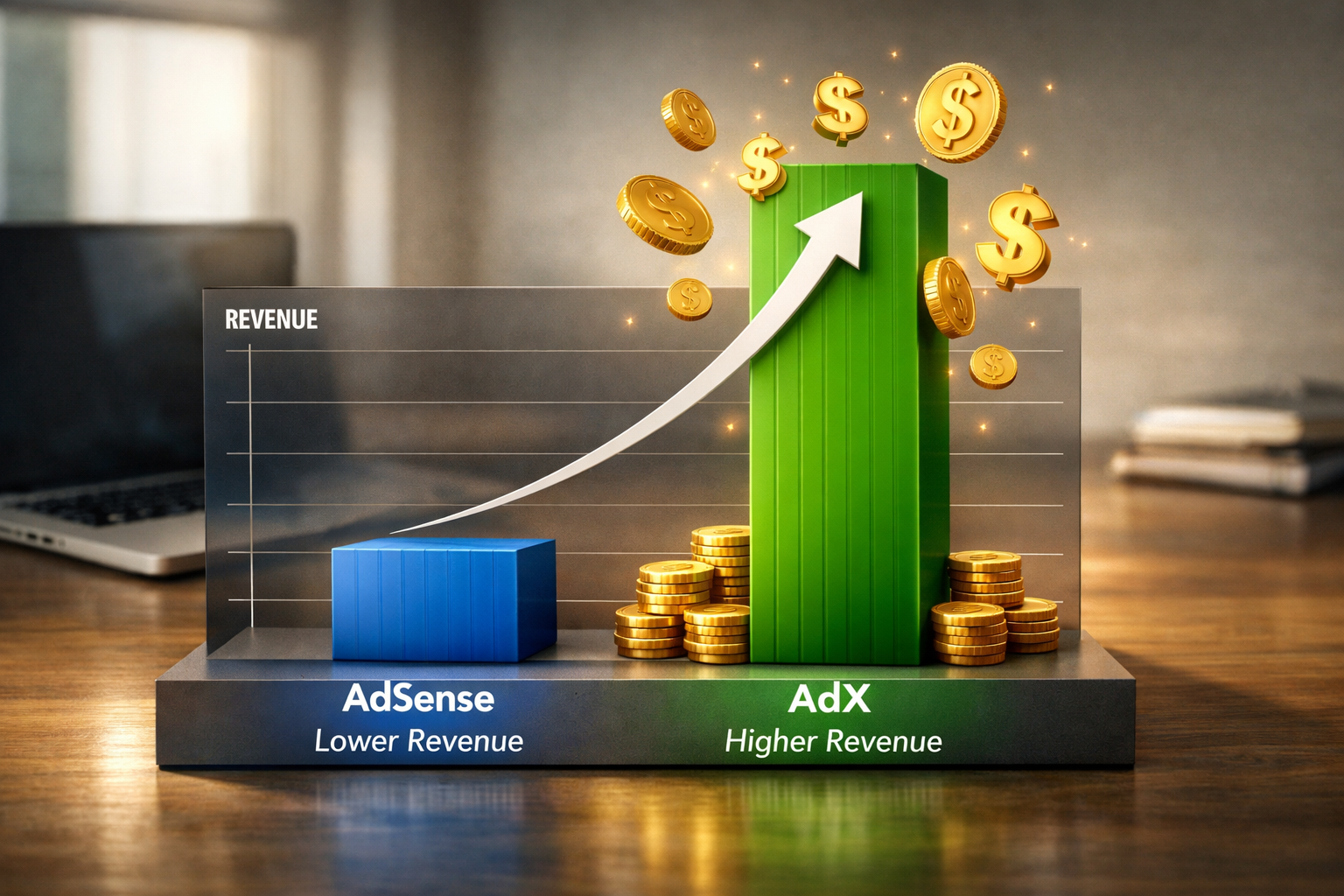
Alt Text: Bar chart showing AdX vs AdSense earning growth and revenue increase
Eligibility and Requirements
While the AdX vs AdSense earning potential is higher with AdX, the entry requirements are much stricter.
•AdSense Requirements: A website with original content, a clear privacy policy, and compliance with Google’s program policies. There is no specific traffic minimum.
•AdX Requirements: Typically requires at least 5 million monthly page views or an invitation from a Google Certified Publishing Partner (GCPP). You must also have a Google Ad Manager account.
Which Platform Should You Choose?
The choice between AdX vs AdSense earning models depends on your current traffic and technical resources.
“If you are just starting out, AdSense is your best friend. But once you hit the 100k+ monthly visitor mark, it’s time to start looking at AdX through a partner.” — Digital Monetization Expert
When to Stick with AdSense:
•You have less than 100,000 monthly page views.
•You want a “set it and forget it” solution.
•You don’t have a dedicated ad operations team.
When to Move to AdX:
•You have high traffic (millions of views).
•You want to sell direct deals to premium advertisers.
•You want to set floor prices to ensure you never sell your inventory too cheaply.

Alt Text: Programmatic advertising network representing AdX vs AdSense earning ecosystem
Conclusion
Maximizing your AdX vs AdSense earning requires a strategic approach. While AdSense provides a solid foundation for growth, AdX offers the advanced tools and competition necessary to reach the next level of revenue. By understanding the nuances of real-time bidding and CPM optimization, you can ensure your website remains a profitable asset for years to come.
For more information on optimizing your ad stack, check out the official Google Ad Manager documentation or consult with a Google Certified Publishing Partner.